May 9, 1774: The Dawn of a Doomed Reign – Louis XVI and Marie Antoinette Take the Throne
- History Tidbits
- May 9, 2025
- 3 min read
Updated: May 11, 2025

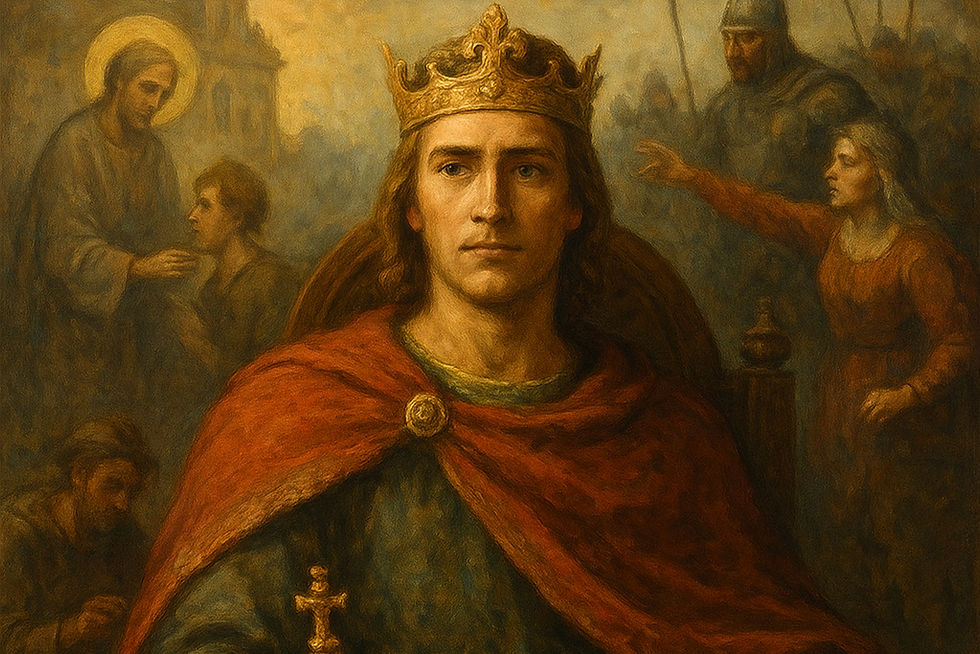
On May 9, 1774, Louis XVI ascended to the throne of France, marking the beginning of a reign that would forever change the course of French history. At just 20 years old, the young king faced a tumultuous political landscape, a kingdom burdened by debt, and the shadow of revolution creeping closer with each passing year. His accession, however, was not just a political event; it also marked the beginning of his journey alongside his queen, Marie Antoinette, whose legacy would forever be intertwined with his own.
Louis XVI was not born into a life of ambition for kingship. He was the third son of the Dauphin, Louis, and had little expectation of ever becoming king. However, the sudden deaths of his grandfather and father thrust him into a role he was not fully prepared for. His personality—thoughtful, earnest, and often indecisive—was seen by many as a contrast to the larger-than-life figures of his predecessors. Despite this, he was committed to his duty, aware of the great responsibility that lay on his shoulders.
Louis XVI's marriage to Marie Antoinette in 1770, just four years before he became king, was a strategic alliance designed to strengthen ties between France and Austria. Marie Antoinette, an Austrian archduchess, was only 14 at the time, and her marriage to the young French heir was meant to solidify peace between the two long-time rivals. Despite the political nature of their union, the young queen brought a fresh vitality to the French court. She was admired for her beauty and charm but also criticized for her lavish spending, which later fuelled public resentment against the monarchy.
By the time Louis XVI became king, France was struggling under the weight of war debts, an inefficient tax system, and rising public dissatisfaction. The nation's financial crisis, exacerbated by France’s involvement in the American Revolution, would become a central challenge for Louis. The king's attempts to reform the economy were met with resistance from the nobility and clergy, who feared the loss of their privileges. As a result, Louis XVI found himself in a constant struggle between his desire to bring about necessary change and the ingrained power structures that stood in his way.
Marie Antoinette, too, was drawn into the political and social turmoil of the time. Though often blamed for France's financial woes, she was more a scapegoat than the true cause of the nation's problems. Her extravagant lifestyle, which included expensive fashion and lavish parties, became a focal point of criticism. The infamous phrase "Let them eat cake," which she is often (though incorrectly) attributed to saying, epitomized the growing disconnect between the royal family and the suffering common people.
As the years progressed, France's economic difficulties deepened, and unrest grew. The Estates-General of 1789, a representative body convened by Louis XVI to address the financial crisis, quickly spiralled into the French Revolution. The once-glamorous monarchy was soon seen as a symbol of inequality and oppression. Louis and Marie Antoinette, once beloved by some, were now targets of widespread hatred. Their failure to navigate the political currents of the time—coupled with Marie Antoinette's unpopular reputation—sealed their fate.
The royal family’s attempted escape from Paris in June 1791, known as the Flight to Varennes, further damaged their credibility. The attempt to flee to Varennes, where they hoped to rally royalist forces, ended in capture and humiliation. By this point, the revolution had gathered unstoppable momentum. In 1792, the monarchy was officially abolished, and the couple was imprisoned. Their once-glamorous court life was replaced by the grim realities of political imprisonment.
On January 21, 1793, Louis XVI was executed by guillotine, marking the end of the Bourbon monarchy in France. Just nine months later, on October 16, Marie Antoinette met the same fate. Their deaths symbolized the fall of an old order and the rise of a new, revolutionary France. Yet, despite their tragic end, Louis XVI and Marie Antoinette remain central figures in the history of the French Revolution, remembered not only for their roles as monarchs but for their humanity and the personal struggles they faced amidst extraordinary circumstances.
May 9th, is a day to reflect on the complex and often tragic story of Louis XVI and Marie Antoinette. Their reign, filled with both promise and failure, offers a poignant reminder of how swiftly history can change. From royal opulence to revolutionary fervour, their legacy continues to capture the imagination of those who study the turbulent days of late 18th-century France. While their reign may have ended in tragedy, their story remains an enduring part of the fabric of European history, one that reminds us of the fragility of power and the enduring consequences of social and political upheaval.


Comments